Research
Gene regulation is a classical and fundamental problem in biology. It explains how the same genetic code can give rise to diverse cellular phenotypes and how cells adapt to different external and internal perturbations. Conceptually, it can be viewed as a complex regulatory network in which thousands of molecular interactions jointly control cellular behavior. My previous research has focused on this topic, particularly RNA regulation in evolution and human disease.
With the emergence of single-cell sequencing technologies, which generate high-dimensional biological data, deep learning approaches can now be applied to model these systems at scale and reconstruct gene regulatory networks (GRNs). We combine deep generative models with optimal transport to recover RNA isoform expression at the single-cell level. Our goal is to construct RNA-centric GRNs and ultimately move toward building a virtual cell to better understand cellular responses and support drug discovery.
Building on my background in RNA biology, I aim to apply AI methods to predict dynamic RNA structures and model RNA interactions in vivo. Compared with proteins, RNA structures are more flexible and dynamic, particularly within the cellular environment, where factors such as ion concentration, temperature, and helicase activity all influence RNA conformation. We aim to address these challenges by leveraging multi-omics data and deep learning models to capture RNA structural dynamics, ultimately advancing the development of RNA-based therapeutics.
Biological processes involve coordinated interactions among multiple molecules to carry out specific cellular functions. Unlike predicting protein or RNA structures, which often rely on information from a single modality, modeling biological processes requires learning from multimodal data. Taking antigen presentation as an example, we integrate multi-omics data—including genomics, transcriptomics, proteomics, and immunopeptidomics—to build a unified model. Our goal is to improve mechanistic understanding and ultimately facilitate cancer vaccine design.
Resources
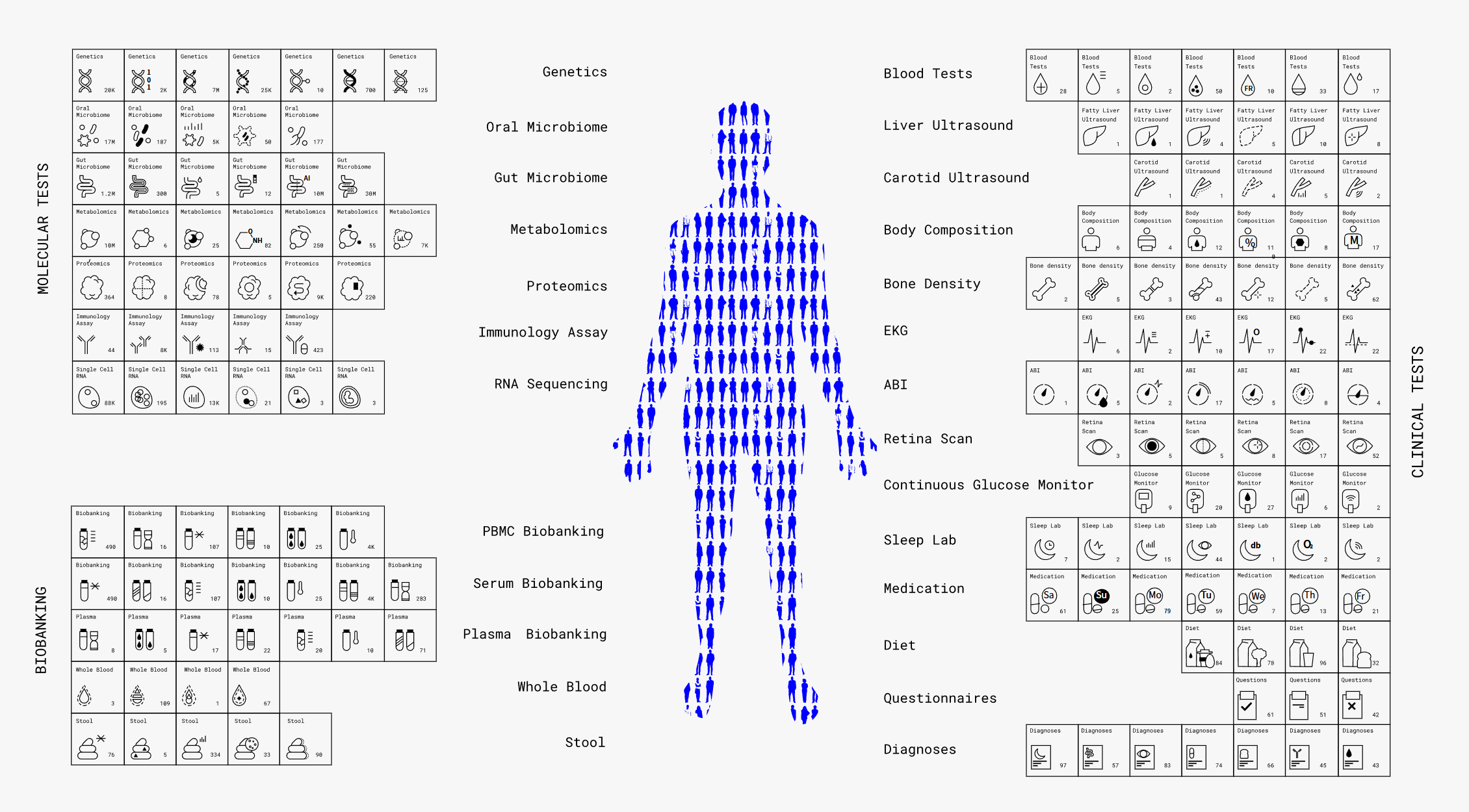
The Human Phenotype Project is a landmark initiative, powered by Pheno.AI, that set out to deeply profile hundreds of thousands of participants from around the world, in an effort to unlock the information researchers need to improve human health.
The Emirati Genome Program is a significant national project that aims to draw a comprehensive genetic map for UAE citizens to accelerate the development of advanced preventive and personalised healthcare solutions for the nation’s present and future generations.