Bin Zhang's Lab

Publications

Looking ahead, our research aims to develop interpretable biological foundation models, with a focus on antigen presentation and RNA isoform regulation at single-cell resolution. Moving beyond traditional gene-centric approaches, we explore isoform-level expression as a fundamental representation to characterize cell types, cellular states, and their spatiotemporal dynamics. This perspective enables a more precise and mechanistic understanding of cellular regulation.

By integrating multi-omics data, single-cell technologies, and AI-driven modeling, we seek to construct RNA-centric gene regulatory networks that address key limitations of existing biological foundation models, particularly in interpretability and regulatory resolution. Ultimately, our work aims to advance the quantitative understanding of living systems and to support the rational design of biological processes for applications in biomedicine and beyond.

Highlighted
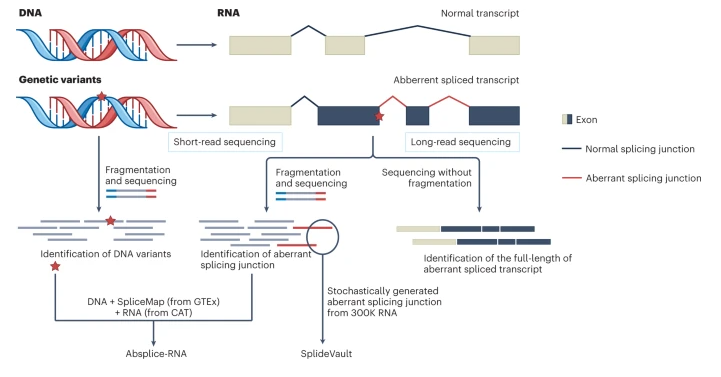
Deciphering DNA variant-associated aberrant splicing with the aid of RNA sequencing
Bin Zhang, Xin Gao
Nature Genetics  ·  04 May 2023  ·  doi:10.1038/s41588-023-01363-5
Aberrant RNA splicing events resulting from DNA variations are common causes of genetic disorders. Two studies published in Nature Genetics independently describe methods to decipher DNA-variant-associated aberrant splicing using high-throughput RNA sequencing data.

All

2025

Stabilizing a mammalian RNA thermometer confers neuroprotection in subarachnoid hemorrhage
Min Zhang, Bin Zhang, Chengli Liu, Marco Preußner, Megha Ayachit, …, Li Yu, Mario Schubert, Xin Gao, Mingchang Li, Florian Heyd
Nature Communications  ·  18 Sep 2025  ·  doi:10.1038/s41467-025-63911-3
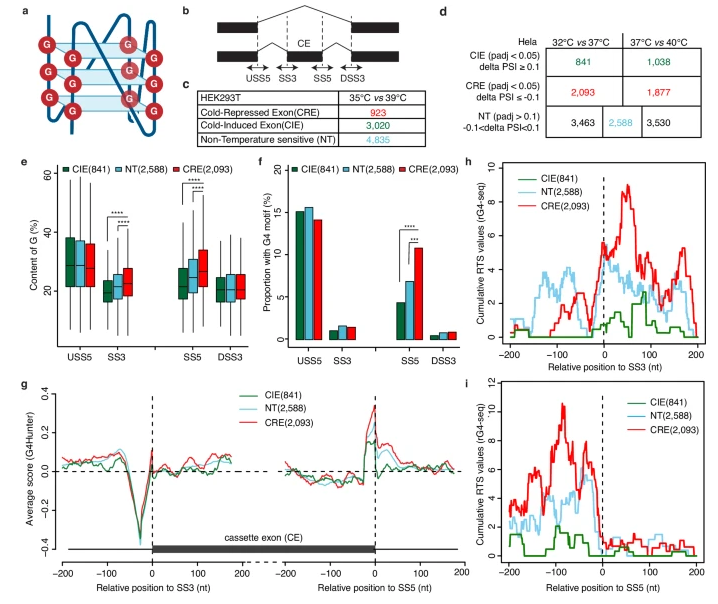
Mammals tightly regulate their core body temperature, yet how cells sense and respond to small temperature changes remains incompletely understood. Here, we discover RNA G-quadruplexes (rG4s) as key thermosensors enriched near splice sites of cold-repressed exons. These thermosensing RNA structures, when stabilized, mask splice sites, reducing exon inclusion.

2024

An AI Agent for Fully Automated Multi Omic Analyses
An AI Agent for Fully Automated Multi‐Omic Analyses
Juexiao Zhou, Bin Zhang, Guowei Li, Xiuying Chen, Haoyang Li, …, Siyuan Chen, Wenjia He, Chencheng Xu, Liwei Liu, Xin Gao
Advanced Science  ·  03 Oct 2024  ·  doi:10.1002/advs.202407094
With the fast-growing and evolving omics data, the demand for streamlined and adaptable tools to handle bioinformatics analysis continues to grow. In response to this need, Automated Bioinformatics Analysis (AutoBA) is introduced, an autonomous AI agent designed explicitly for fully automated multi-omic analyses based on large language models (LLMs).
An isoform-resolution transcriptomic atlas of colorectal cancer from long-read single-cell sequencing
Zhongxiao Li, Bin Zhang, Jia Jia Chan, Hossein Tabatabaeian, Qing Yun Tong, …, Wai-Kit Cheong, Dennis Kappei, Ker-Kan Tan, Xin Gao, Yvonne Tay
Cell Genomics  ·  11 Sep 2024  ·  doi:10.1016/j.xgen.2024.100641
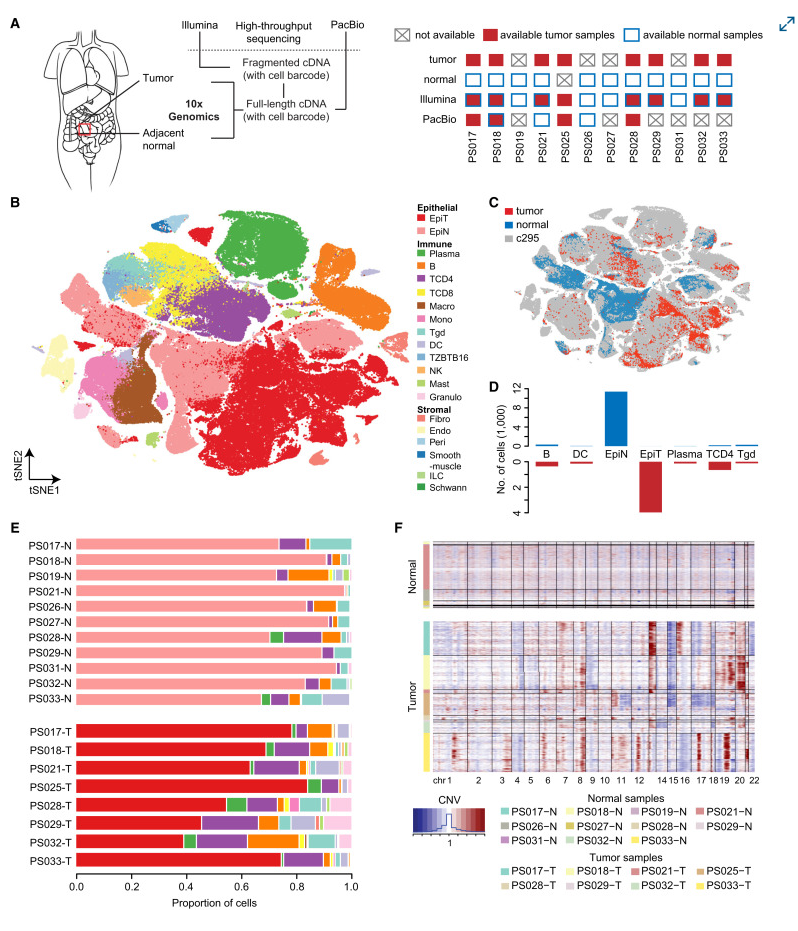
Colorectal cancer (CRC) ranks as the second leading cause of cancer deaths globally. In recent years, short-read single-cell RNA sequencing (scRNA-seq) has been instrumental in deciphering tumor heterogeneities. However, these studies only enable gene-level quantification but neglect alterations in transcript structures arising from alternative end processing or splicing. In this study, we integrated short- and long-read scRNA-seq of CRC samples to build an isoform-resolution CRC transcriptomic atlas.

2023

Deciphering DNA variant-associated aberrant splicing with the aid of RNA sequencing
Bin Zhang, Xin Gao
Nature Genetics  ·  04 May 2023  ·  doi:10.1038/s41588-023-01363-5
Aberrant RNA splicing events resulting from DNA variations are common causes of genetic disorders. Two studies published in Nature Genetics independently describe methods to decipher DNA-variant-associated aberrant splicing using high-throughput RNA sequencing data.
Accurate transcriptome-wide identification and quantification of alternative polyadenylation from RNA-seq data with APAIQ
Yongkang Long, Bin Zhang, Shuye Tian, Jia Jia Chan, Juexiao Zhou, …, Shiwei Sun, Ying Xu, Yvonne Tay, Wei Chen, Xin Gao
Genome Research  ·  28 Feb 2023  ·  doi:10.1101/gr.277177.122
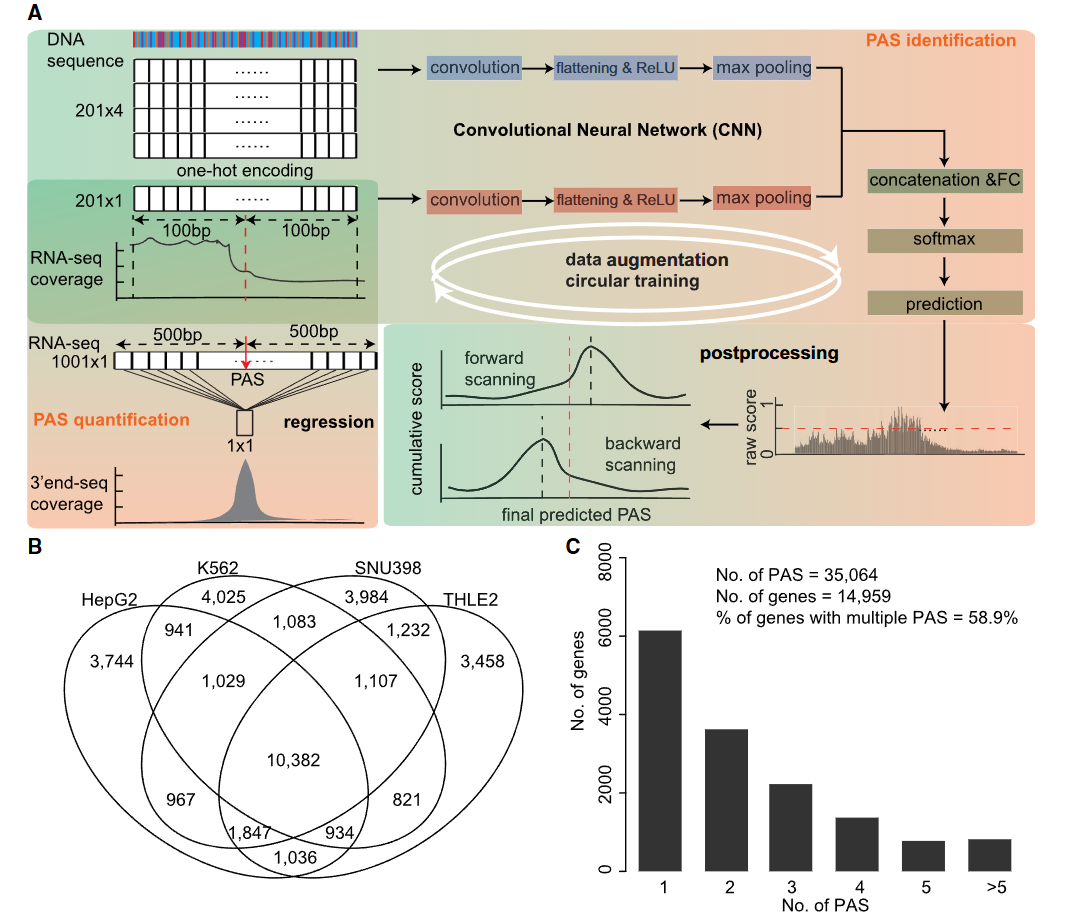
Alternative polyadenylation (APA) enables a gene to generate multiple transcripts with different 3′ ends, which is dynamic across different cell types or conditions. Many computational methods have been developed to characterize sample-specific APA using the corresponding RNA-seq data, but suffered from high error rate on both polyadenylation site (PAS) identification and quantification of PAS usage (PAU), and bias toward 3′ untranslated regions. Here we developed a tool for APA identification and quantification (APAIQ) from RNA-seq data, which can accurately identify PAS and quantify PAU in a transcriptome-wide manner.

2022

Pan-cancer pervasive upregulation of 3 UTR splicing drives tumourigenesis
Pan-cancer pervasive upregulation of 3′ UTR splicing drives tumourigenesis
Jia Jia Chan, Bin Zhang, Xiao Hong Chew, Adil Salhi, Zhi Hao Kwok, …, Leilei Chen, Xin Gao, Pierce K. H. Chow, Henry Yang, Yvonne Tay
Nature Cell Biology  ·  26 May 2022  ·  doi:10.1038/s41556-022-00913-z
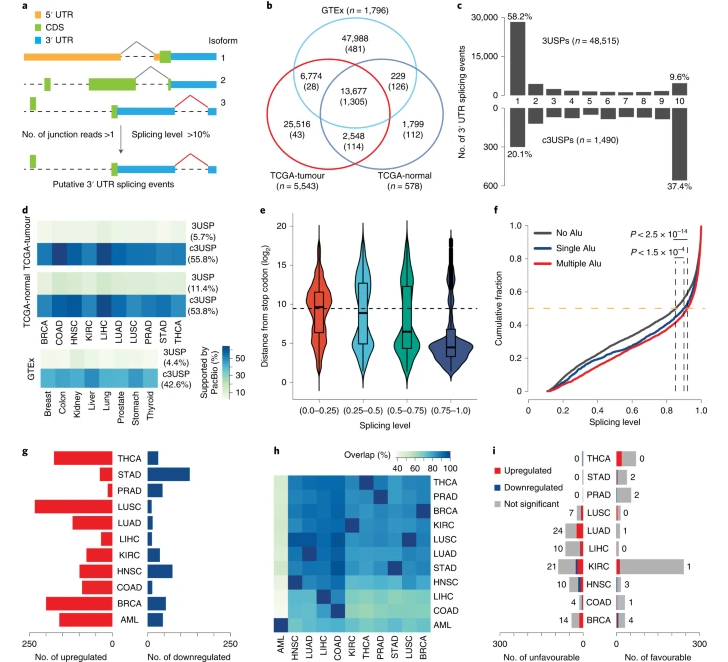
Most mammalian genes generate messenger RNAs with variable untranslated regions (UTRs) that are important post-transcriptional regulators. In cancer, shortening at 3′ UTR ends via alternative polyadenylation can activate oncogenes. However, internal 3′ UTR splicing remains poorly understood as splicing studies have traditionally focused on protein-coding alterations.